The U.S. spaceplane X-37B is preparing for a “quantum navigation” test

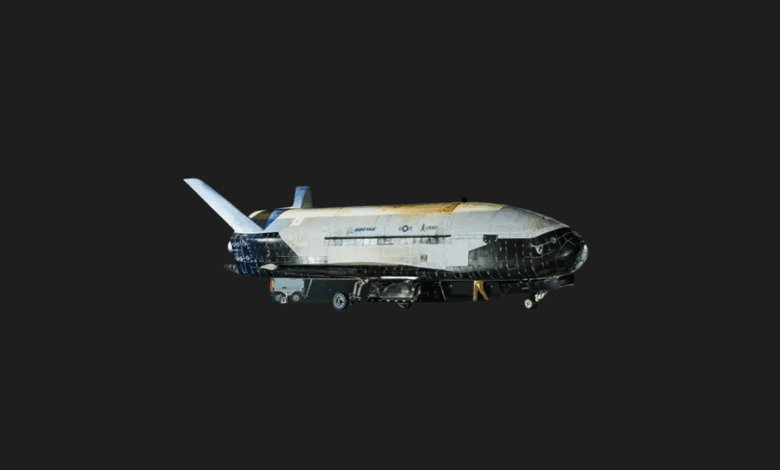

The mysterious U.S. Air Force spaceplane X-37B is set to launch for the eighth time on August 21, 2025. On each flight, the X-37B hosts different experiments, but this time, it will test a potentially historic technology: a quantum inertial sensor.
Alternative Technology to GPS

Today, GPS has become an indispensable part of our lives, used in countless areas from cell phones to airplanes, ships, and the logistics sector. However, GPS doesn’t work everywhere. Signals cannot be received in deep space, it’s unusable in submarines, and can be easily jammed or spoofed during times of war or crisis.
This is why a navigation system that can operate independently and does not require signals is critically important. The quantum sensor to be tested on the X-37B could create a revolution in this field.
Finding Direction with Quantum Physics
Classical inertial navigation systems (INS) estimate a vehicle’s movement by measuring accelerations and rotations. However, over time, small errors accumulate, degrading position information, which then needs to be corrected with external signals like GPS.
This is where quantum technology comes in. The sensor carried by the X-37B cools atoms to a temperature close to absolute zero, causing them to behave like waves. Lasers are used to make the atoms follow two different paths, and then these paths are recombined. Even the slightest changes in movement leave a trace in the resulting interference pattern. This makes it possible to have a navigation system that is orders of magnitude more sensitive and signal-independent than classical systems.
First Time in a Real Mission
NASA’s Cold Atom Laboratory and Germany’s MAIUS-1 missions have previously sent atom interferometers into space, but these were limited to scientific experiments. The X-37B, however, will be the first to test this technology as a long-term, practical navigation solution.


If successful, a new era could begin for military operations where GPS is unavailable, as well as for Moon, Mars, and deep space missions.
The Global Race Has Accelerated
Many countries, including the U.S., China, and the U.K., are investing billions of dollars in quantum navigation. In 2024, Boeing and AOSense successfully tested quantum inertial sensors for the first time on a passenger plane, completing a four-hour GPS-free flight. In the same year, the U.K. also publicly announced its own test on a commercial aircraft.
You Might Also Like;